When does OSHA require handwashing stations?
The trigger is the type of work, not the headcount. OSHA 1926.51(f)(1) requires washing facilities specifically where employees apply paints, coatings, herbicides or insecticides, or work with other operations where harmful contaminants may be present. If your Delray Beach crew is spraying, coating, or handling chemical treatments, that rule applies directly. It is not a blanket handwashing mandate for every job site, and a lot of contractors assume it is. Separately, OSHA 1926.51(c) sets toilet counts by crew size, and pairing a portable toilet rental with a wash station covers both angles. For general industry workplaces rather than construction sites, 1910.141(c)(1)(i) sets its own toilet ratio. Agricultural operations fall under a different standard entirely: OSHA 1928.110 requires potable water, toilets, and handwashing for hand-labor employees, at one facility per 20 workers, within a quarter mile walk. Farms and groves near Delray Beach doing seasonal harvest work should check our farm and agricultural restrooms page for how that pencils out. If you are unsure which standard fits your job, the OSHA portable toilet requirements guide breaks down the difference between construction, general industry, and ag rules side by side.
What does a handwashing station need to include?
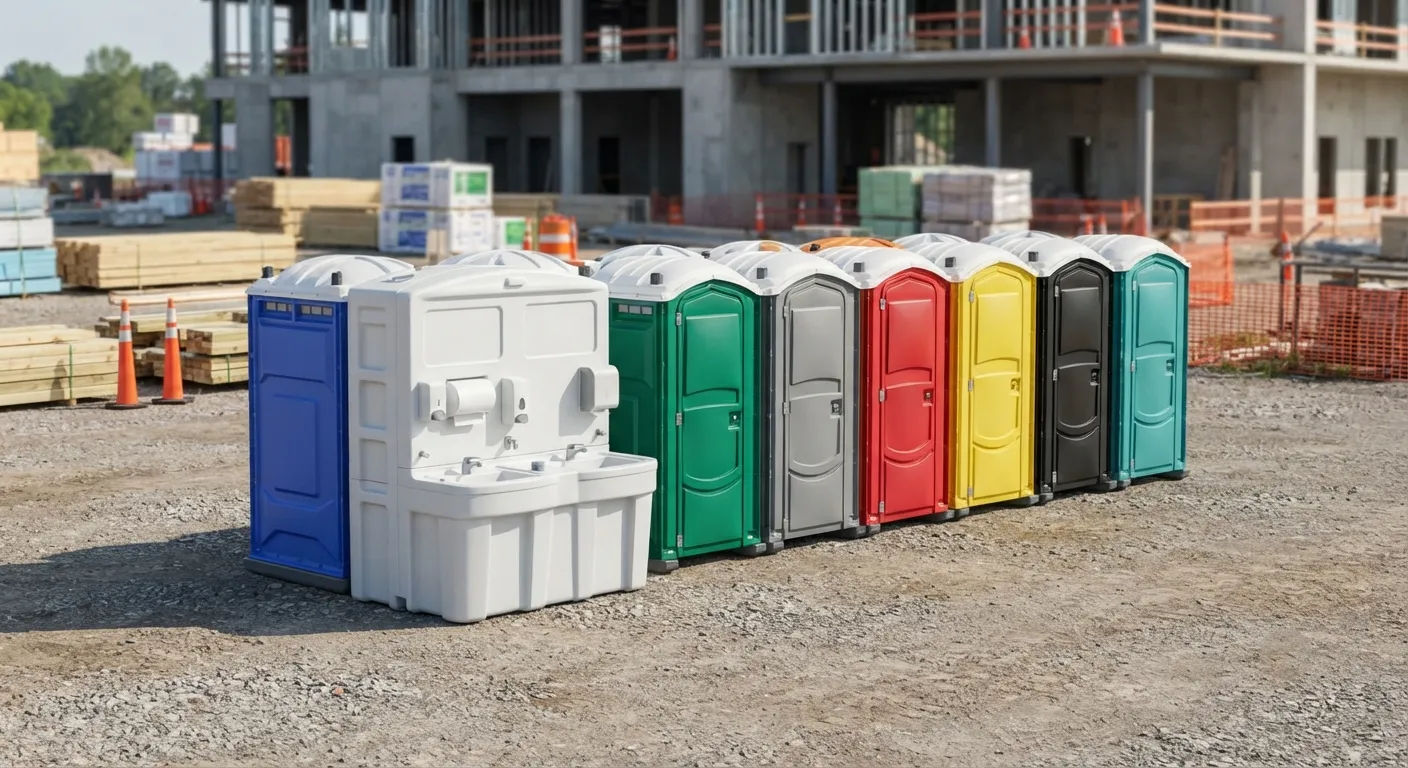
A compliant station needs potable water, soap, and a way to dry hands. That is the baseline under 29 CFR 1910.141(d)(2), and OSHA 1926.51(a)(1) separately requires an adequate supply of potable water at all places of employment. Sanitizer dispensers are fine as a supplement, but they do not replace soap and water where the standard calls for washing facilities. Delray Beach Porta Pros sets up self-contained units with a foot pump or hand crank, a fresh water tank, a soap reservoir, and paper towel dispensing, so crews are not relying on wipes alone. These pair naturally with a handwashing station rental delivered alongside your toilets, or a standalone portable sink rental for food trucks and concession booths. If your event only needs a light-duty option for guests rather than a jobsite compliance fix, a hand sanitizer station rental is the simpler add-on. Placement matters too: stations belong close enough to the work area that workers actually use them, but far enough from the toilet bank that lines do not collide. Our porta potty placement guide covers spacing for both.
How many handwashing stations does my Delray Beach site need?
There is no fixed handwashing count tied to worker numbers the way toilets are. Instead, size it to your toilet count and your crew's foot traffic. A common approach is one wash station per two to three toilets, so people are not backtracking across the site. If you are running the numbers under OSHA 1926.51(c), for a crew of 20 or fewer you need one toilet facility; from 20 up to 40 workers, add a second toilet seat and urinal. Our how many porta potties do I need guide walks through those tiers with worked examples. For events in Delray Beach, from a backyard wedding restroom rental to something the size of a festival restroom rental setup, guest counts drive the math more than a strict labor ratio. ANSI/PSAI Z4.3 sets the baseline service interval for portable sanitation at once per week for up to 10 users over a 40 hour week, which is a useful reference point for how often stations and toilets both need attention on a steady jobsite.
Do handwashing stations need to be ADA accessible?
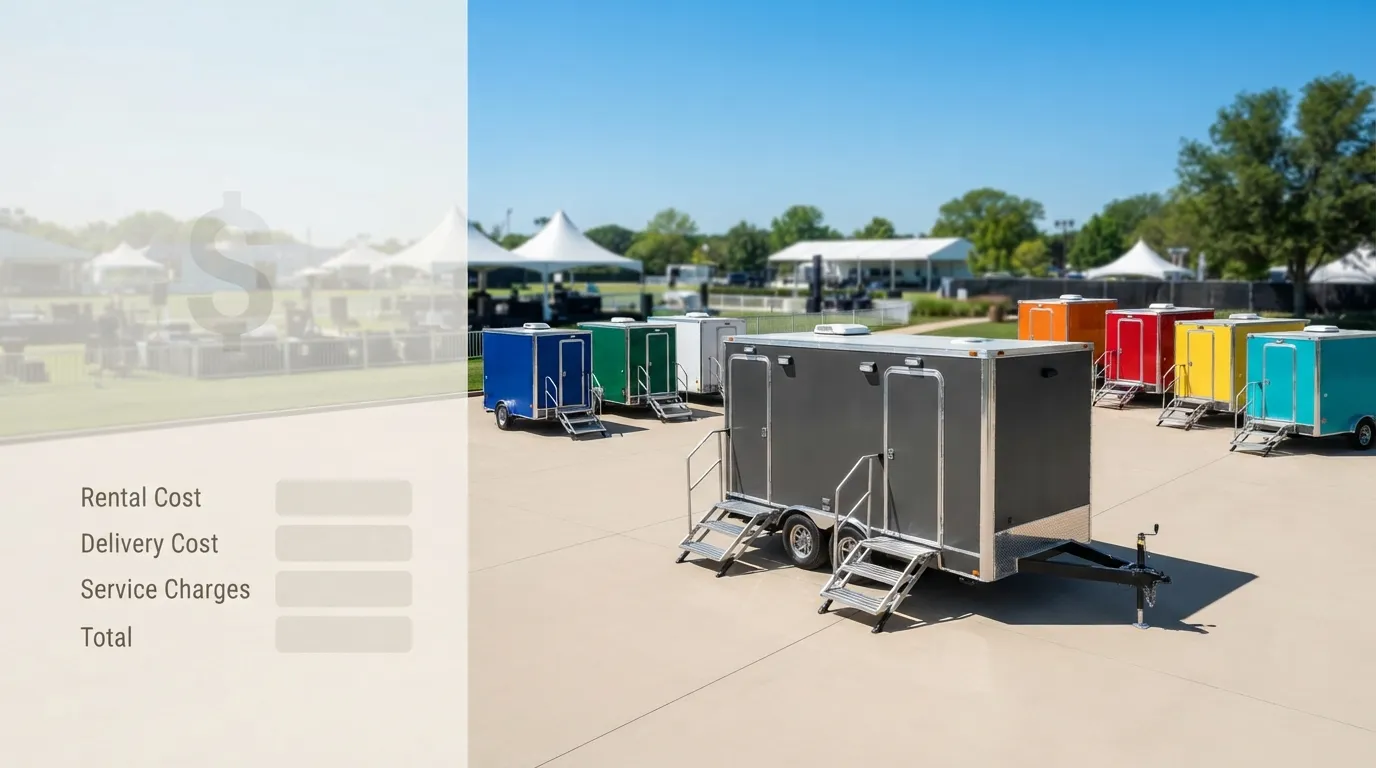
Yes, if you are clustering portable units for public use. ADA Standards section 213.2 requires that where single-user portable toilet units are grouped together, at least 5 percent, and never fewer than one, must be accessible, and that same logic extends to paired wash stations at public events. An accessible setup needs a 36 inch clear route per ADA 403.5.1, a 32 inch minimum door opening per ADA 404.2.3, and a 60 inch turning circle per ADA 304.3.1. Reach ranges also matter for the soap dispenser and paper towel holder: ADA 308.2.1 caps a forward reach at 48 inches high and 15 inches low, and ADA 309.4 requires operable parts that do not need tight grasping or more than 5 pounds of force. Our ADA accessible porta potty page details unit specs, and the ADA restroom requirements guide covers the ground surface rule under ADA 302.1, which calls for stable, firm, slip-resistant footing under the unit.
| unit | duration | typical price |
|---|---|---|
| standard | day | $150 |
| standard | week | $200 |
| ada | day | $230 |
| delivery_fee | day | $150 |
Prices above reflect typical rates across our measured data; see porta potty rental cost for the full breakdown by duration, or porta potty rental per day if you're only renting for a single day. For jobs running months instead of days, check monthly porta potty rental pricing before you commit to a long-term order.
Do I need a handwashing station if I already have a portable toilet?
Not automatically. A standalone toilet satisfies OSHA 1926.51(c) toilet-count rules on its own. But if your crew applies paints, coatings, or pesticides, 1926.51(f)(1) kicks in separately and requires washing facilities specifically for that contaminant exposure, toilet or no toilet.
Can hand sanitizer replace a soap-and-water station?
No. Under 29 CFR 1910.141(d)2), a washing facility needs soap and towels or a hand-drying device. Sanitizer is a reasonable supplement for guests at an event, but it does not satisfy the standard where actual washing facilities are required by OSHA.
How far can Delray Beach Porta Pros deliver handwashing stations?
We serve Delray Beach directly and drive out to nearby towns regularly, including Highland Beach 4.8 miles southeast and Gulf Stream 6.0 miles northeast. Check service areas for the full coverage map before requesting delivery.
What is the difference between a handwashing station and a portable sink?
Mostly capacity and plumbing. A dedicated handwashing station is built for quick-turn washing with a foot pump and small tank, while a portable sink often has a larger reservoir and sometimes hot water, better suited to food service or a longer event day.
Does a construction site always need a handwashing station?
Only when the triggering work is present. General labor without paint, coatings, herbicides, or insecticide exposure falls under OSHA 1926.51(c) for toilets and 1926.51(a)(1) for potable water, not the washing-facility rule in 1926.51(f)(1), which is contaminant-specific.
Next step
Get a delivery date
Tell us the address, the dates and the headcount. We size the order and confirm the route.