
How Do Porta Potties Work?
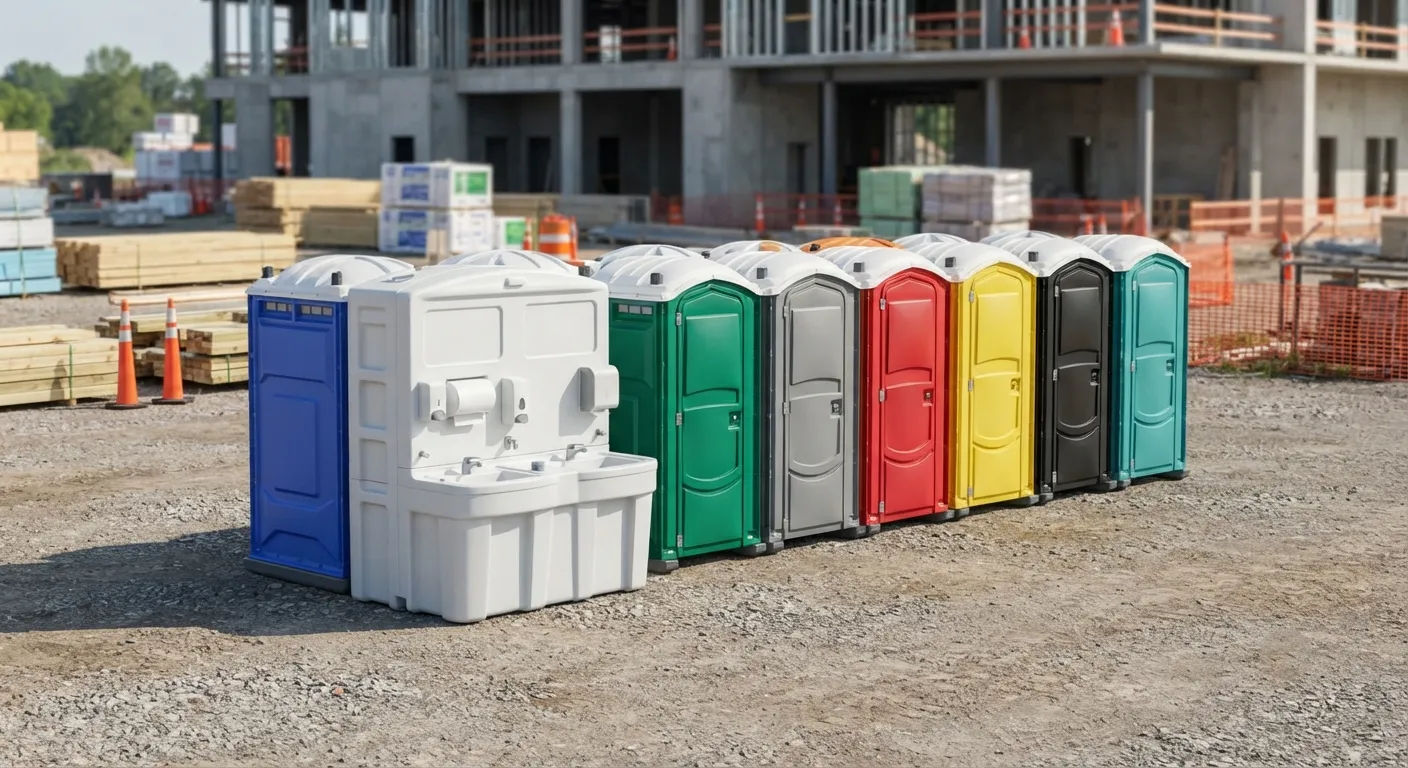
The unit sits on a footprint about 44 by 48 inches, standing roughly 92 inches tall. Underneath the seat is a sealed holding tank. When someone uses it, waste drops into that tank, where a blue chemical solution breaks down solids and traps odor. There is no flushing action and no water use in a standard porta potty rental. A vent stack pulls gas up and out instead of letting it build inside the unit. Service technicians show up on a route, pump the tank with a vacuum hose, rinse it, and restock toilet paper and sanitizer. ANSI/PSAI Z4.3 sets the baseline service interval at once a week for up to 10 users over a 40 hour week, though busy job sites or events in Delray Beach often need more frequent visits. For a construction worker running to a porta potty between pours, the whole point is speed: no line for a sewer connection, no waiting on plumbing. If you are trying to figure out how many units a crew or event needs, the how many porta potties do I need guide walks through headcounts and duration.
How Do Flushable Porta Potties Work?
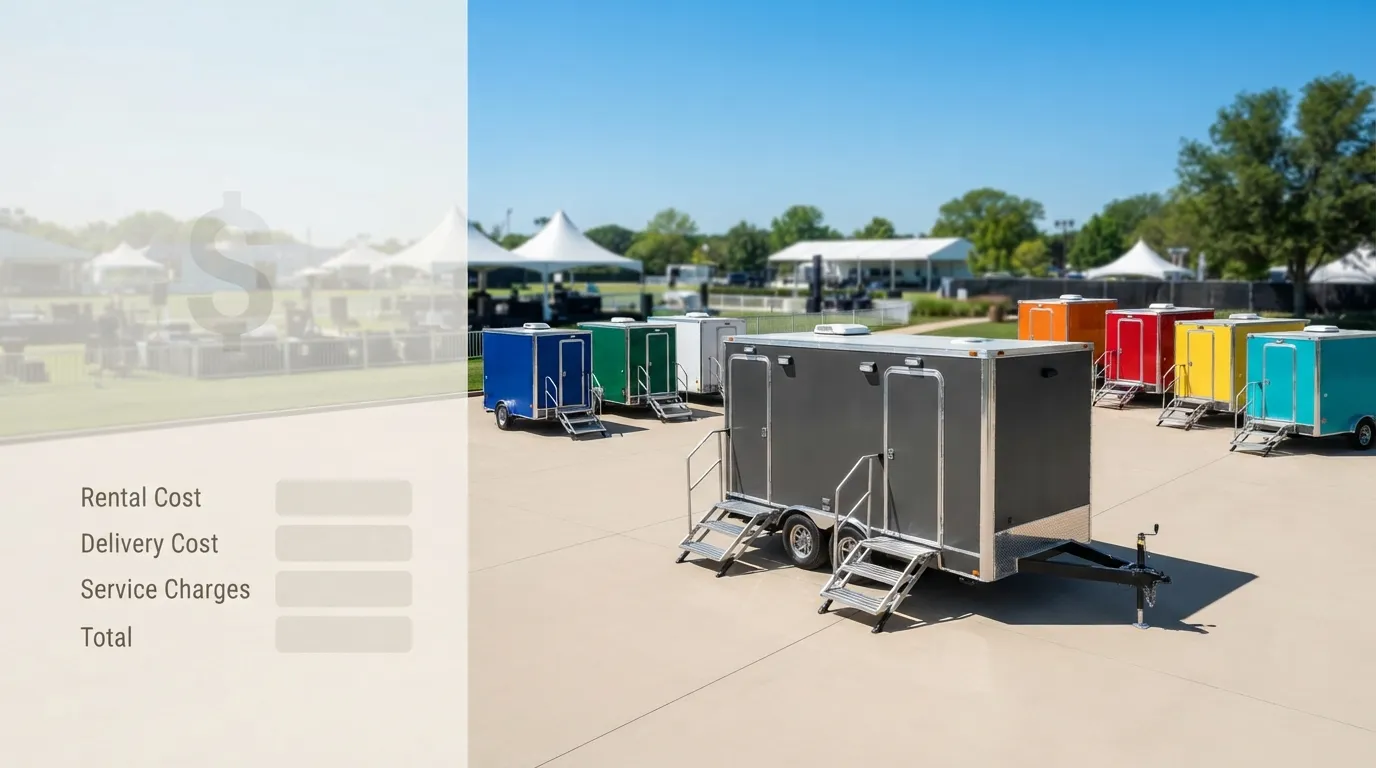
A deluxe flushable porta potty adds a small onboard freshwater tank and a foot pump or hand pump that pushes a rinse of water into the bowl after each use, much like a low-flow toilet in a house. The waste still goes into a holding tank below, just like a standard unit, but the flush cuts down on odor and buildup between services. Some deluxe models and full restroom trailer rental units also run a small sink with its own freshwater reservoir, so users can wash up without a hose bib nearby. That is the same idea behind how a portable sink works on its own: a clean water tank feeds the faucet, a grey water tank underneath catches the runoff, and nothing hooks into building plumbing. For weddings, festivals, or backyard renovations, this is the upgrade path from a basic unit. Compare features between the event restroom rental line and the wedding restroom rental packages if you are choosing between a flushable single unit and a full trailer with multiple stalls, including the 2 stall restroom trailer and 4 stall restroom trailer options.
What Chemicals Go In a Porta Potty?
The deodorizer in a holding tank is a blue or green formaldehyde-free solution designed to break down waste and mask odor between services, not to disinfect the way household cleaners do. Technicians handle these portable toilet chemicals during every pump-out, adding a fresh dose after rinsing the tank. This is different from septic tank cleaning chemicals, which some homeowners use to try to boost bacterial digestion in a home septic system. A residential septic tank is typically pumped every 3 to 5 years depending on tank size and household load, and no additive replaces that mechanical pump-out. If your Delray Beach property is showing slow drains or a soggy yard, the septic tank warning signs page covers what to look for before calling for septic pumping service. Grease interceptors follow a different rule: they get pumped once fats, oils, grease and solids reach 25 percent of the liquid depth, which is a volume measurement, not a calendar one. See grease trap pumping for how that applies to restaurants.
Do Camping Porta Potties Work the Same Way?
Camping porta potties work on the same basic principle, a sealed lower tank and a chemical deodorizer, just scaled down into a portable box you carry yourself rather than a delivered unit. They hold far less volume and need dumping far more often. For a group campsite or a multi-day outdoor stay near Delray Beach, a delivered camping porta potty from a rental company is usually more practical than a personal unit, since it gets serviced on-site instead of hauled to a dump station. On construction sites, the standard is different again: OSHA 1926.51(c) sets toilet counts by crew size, starting at one facility for 20 workers or fewer, and 29 CFR 1910.141(d)(2) requires soap and towels or a hand-drying device at washing stations, not just sanitizer. Job sites doing paint, coatings, or pesticide work also fall under OSHA 1926.51(f)(1), which requires washing facilities for that specific contaminant exposure. Full detail on crew-size math lives on the OSHA portable toilet requirements page.
| unit | day | week | month |
|---|---|---|---|
| standard | $100-$350 | $130-$500 | $125-$325 |
| deluxe | $85-$1200 | $150-$290 | - |
| ada | $200-$400 | $240-$400 | - |
Placement matters as much as the mechanics. ADA Standards section 302.1 requires a stable, slip-resistant surface under the unit, and section 405.2 caps any ramp at a 1:12 slope, both worth checking before delivery day. Our porta potty placement guide covers ground surface and clearance in more depth, and ADA restroom requirements breaks down when an ADA accessible porta potty is required on a job or event.
How often do porta potties get serviced?
ANSI/PSAI Z4.3 sets a baseline of once a week for up to 10 users over a standard 40 hour week. High-traffic construction sites or multi-day events in Delray Beach usually need two or three visits weekly. See how often are porta potties cleaned for a breakdown by use case.
Do porta potties need water or electricity hookups?
No. Standard units run entirely on a sealed holding tank and chemical treatment, no water line or power needed. Deluxe and trailer units carry their own onboard freshwater tanks. That is why portable restroom rental works on raw land or lots without utilities.
What is the difference between a porta potty and a porta john?
None, really. They are the same product under two common names. A porta john rental and a portable toilet rental both mean the same standard sealed-tank unit.
Can I rent a porta potty for just one day?
Yes. Day rentals exist for one-day events or short jobs, priced separately from weekly and monthly terms. Check the porta potty rental per day page for how single-day pricing compares to longer terms.
How far in advance should I book for an event in Delray Beach?
Book as early as you can, especially for weekend events, since delivery trucks need clear routing and units get reserved fast in season. Start with request a quote or call the contact page directly.
Next step
Get a delivery date
Tell us the address, the dates and the headcount. We size the order and confirm the route.